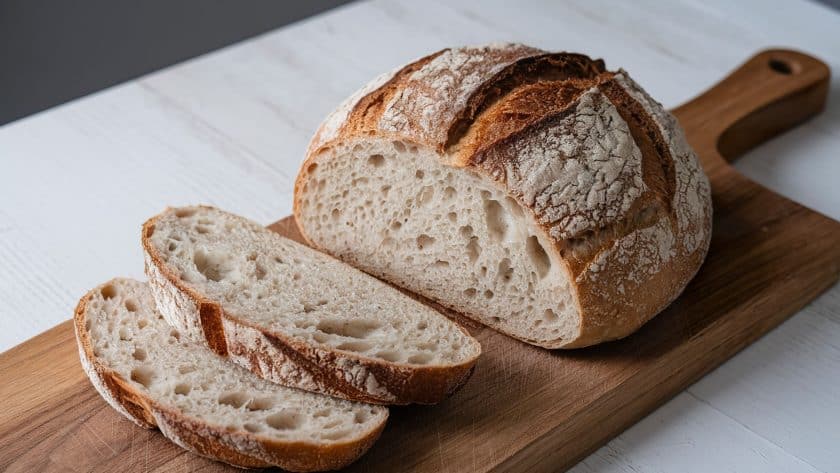
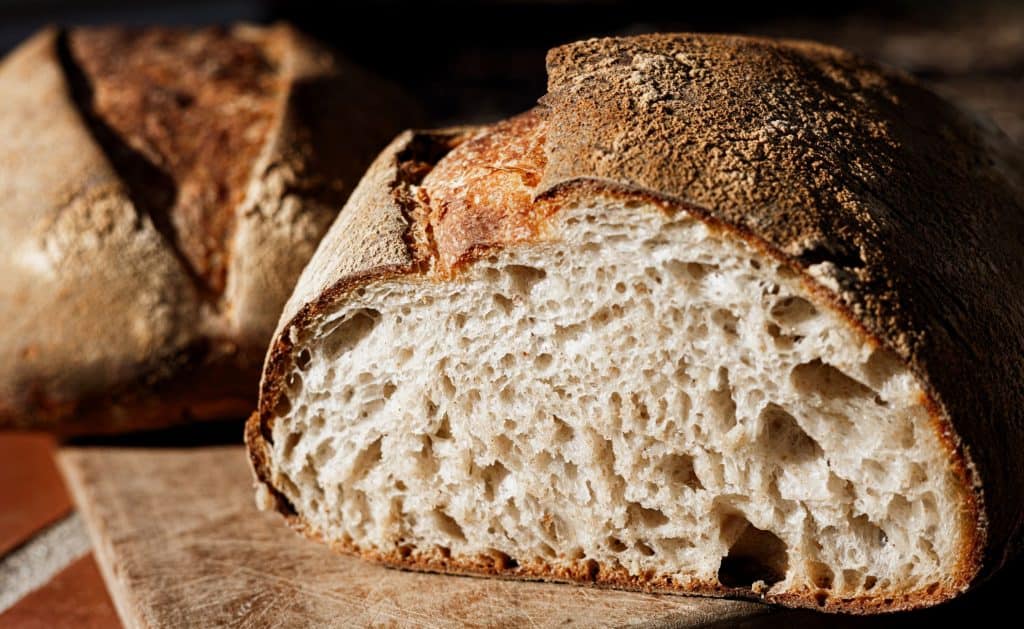
This whole wheat sourdough bread recipe creates a loaf with a crispy golden crust, soft airy crumb, and mild tangy flavor. Made with a blend of whole wheat, bread flour, and all-purpose flour, it delivers the perfect balance of structure, flavour, and texture.
Naturally fermented with a sourdough starter, this recipe is beginner-friendly and includes step-by-step guidance for autolyse, stretch and folds, bulk fermentation, and cold proofing.
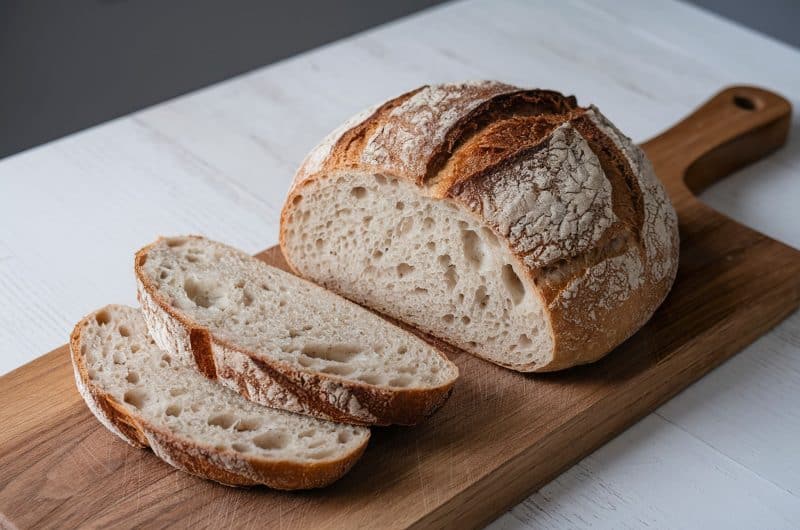
Mary Berry Homemade Whole Wheat Sourdough Bread (Beginner-Friendly)
Course: BreadCuisine: British1
loaf10
minutes45
minutes300
kcalIngredients
55g sourdough starter
385g warm water
15g honey
150g whole wheat flour
155g all-purpose flour
195g bread flour
9g sea salt
Directions
- Mix starter, water, honey, and flours → rest 1 hour
- Add salt and knead lightly
- Perform 4 sets of stretch and folds
- Let dough rise ~75%
- Shape and rest
- Refrigerate 8–10 hours
- Bake at 450°F covered 25 min, then 430°F uncovered 20 min
- Cool before slicing
What Is Whole Wheat Sourdough Bread?
Whole wheat sourdough bread is naturally leavened bread made using a sourdough starter instead of commercial yeast. It uses whole grain flour for a nutty flavour and added nutrition, while fermentation improves digestibility and texture.
Why You’ll Love This Recipe
- Beginner-friendly method with clear steps
- Better flavour from natural fermentation
- Soft crumb + crispy crust
- Balanced texture using mixed flours
- Perfect for toast and sandwiches
Ingredients
- 55g active sourdough starter (100% hydration)
- 385g warm water (85–90°F / 29–32°C)
- 15g honey
- 150g whole wheat flour
- 155g all-purpose flour
- 195g bread flour
- 9g fine sea salt
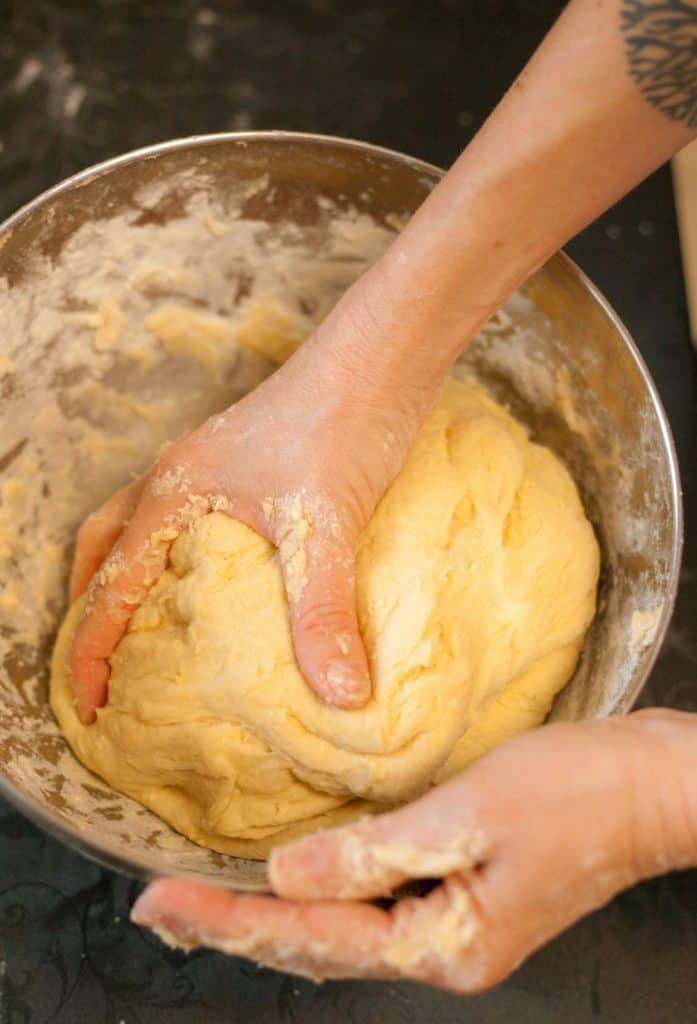
How to Make Whole Wheat Sourdough Bread
1. Mix the Dough (Autolyse)
In a large bowl, mix starter, water, and honey. Add flours and combine until a shaggy dough forms. Cover and rest for 1 hour.
2. Add Salt & Build Gluten
Add salt and knead lightly for 2–3 minutes. Perform the first stretch and fold. Rest 30 minutes.
3. Stretch and Fold
Perform 3 more sets of stretch and folds every 30 minutes (4 total sets).
4. Bulk Fermentation
Let dough rise until it increases by about 75%, looks slightly domed, and shows bubbles on top.
5. Shape the Dough
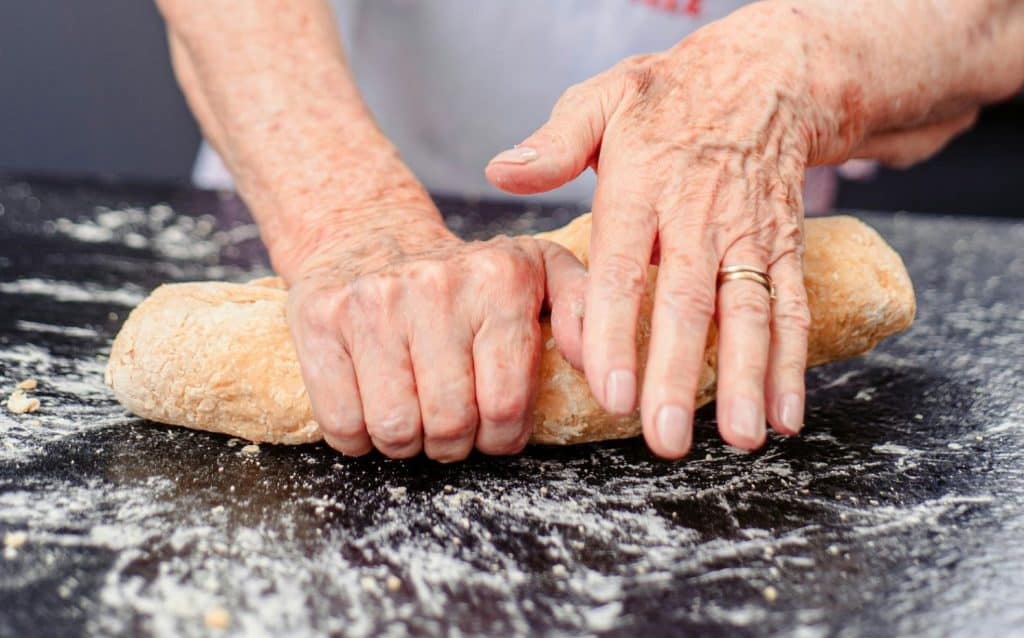
Turn dough onto a floured surface, shape into a round, and rest 15 minutes. Final shape and place into a banneton.
6. Cold Proof
Cover and refrigerate for 8–10 hours.
7. Bake
- Preheat oven and Dutch oven to 450°F (230°C)
- Transfer dough onto parchment and score
- Bake covered for 25 minutes
- Reduce heat to 430°F (220°C) and bake uncovered for 20 minutes
8. Cool
Let cool for at least 1 hour before slicing.
Pro Tips for Success
- Use an active, bubbly starter
- Don’t skip the autolyse (improves hydration)
- Watch the dough, not the clock
- Cold proof for better flavour and structure
- Use a Dutch oven for steam and oven spring
How to Serve
- Toast with butter or jam
- Use for sandwiches
- Serve with soups or stews
- Make avocado toast
Storage Tips
- Store at room temp (cut side down) for 3–4 days
- Freeze slices for longer storage
- Reheat in toaster or oven for best texture
FAQ
Is whole wheat sourdough bread healthier?
Yes, whole wheat sourdough bread is generally healthier than white bread. It contains more fibre and nutrients, and fermentation may improve digestion.
Why is my whole wheat sourdough dense?
Dense sourdough is usually caused by under-proofing, low hydration, or weak starter activity. Whole wheat flour also absorbs more water, so proper hydration is key.
Can I use 100% whole wheat flour?
You can, but the bread will be denser. Mixing with bread flour improves structure and rise.
How long does sourdough bread last?
Sourdough bread stays fresh for 3–4 days at room temperature. It can also be frozen for longer storage.
What is the purpose of stretch and fold?
Stretch and fold develops gluten structure without kneading. It helps create a strong dough and airy crumb.
Do I need a Dutch oven?
A Dutch oven is recommended for best results. It traps steam, which helps create oven spring and a crispy crust.
How do I know when bulk fermentation is done?
The dough should rise about 75%, look slightly domed, and show bubbles on the surface.
Other Similar Recipes
- Mary Berry Sourdough Bread Recipe
- Mary Berry-Style Gluten Free Sourdough Recipe
- Mary Berry Lemon Rhubarb Sourdough