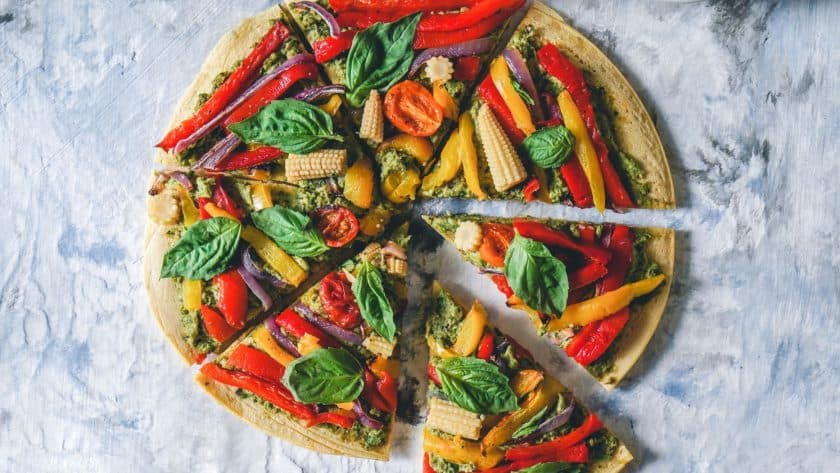
I’m a great believer that homemade pizza doesn’t need to involve mountains of cheese to be satisfying. This vegan version proved that rather nicely.
The first time I made it, I got a little enthusiastic with the vegetables. I piled on peppers, courgettes, mushrooms and artichokes until the poor pizza base could barely be seen. It looked wonderful going into the oven, but the middle came out softer than I wanted.
That taught me an important lesson: thin vegetables and restraint are your friends here.
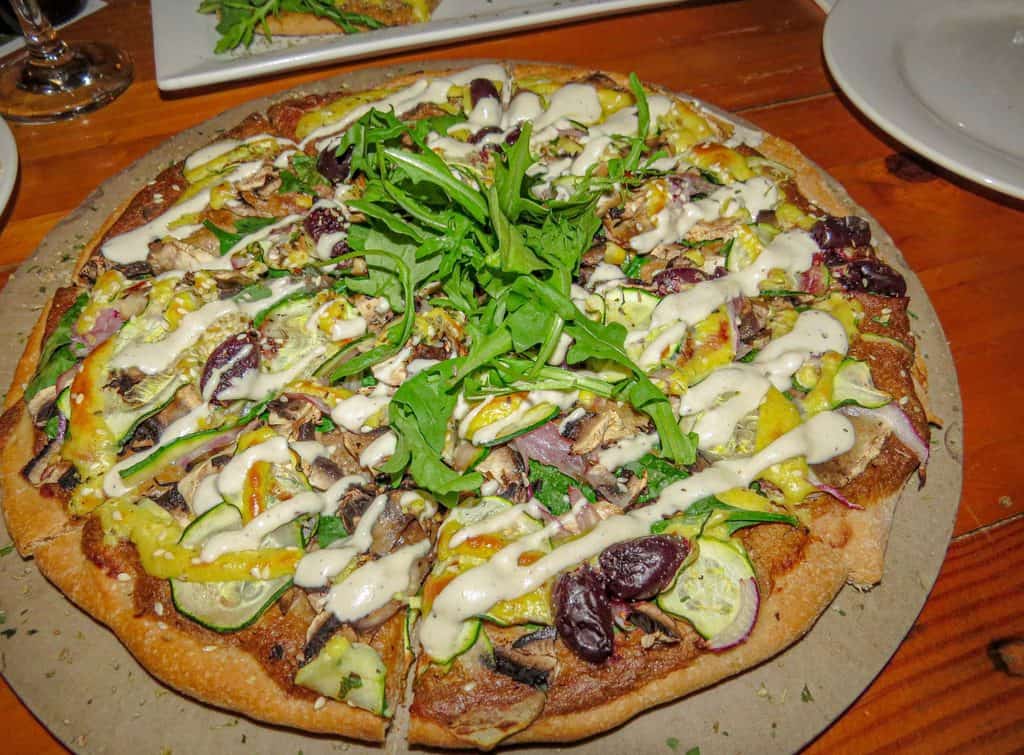
Once I sliced everything properly and kept the topping sensible, the result was completely different. The crust turned golden and crisp, the tomato sauce stayed rich rather than watery, and the olives and artichokes brought enough savoury flavour that I didn’t miss cheese at all.
So if you’ve been wondering how to make a vegan pizza that actually feels like proper pizza, let me show you what worked in my kitchen.
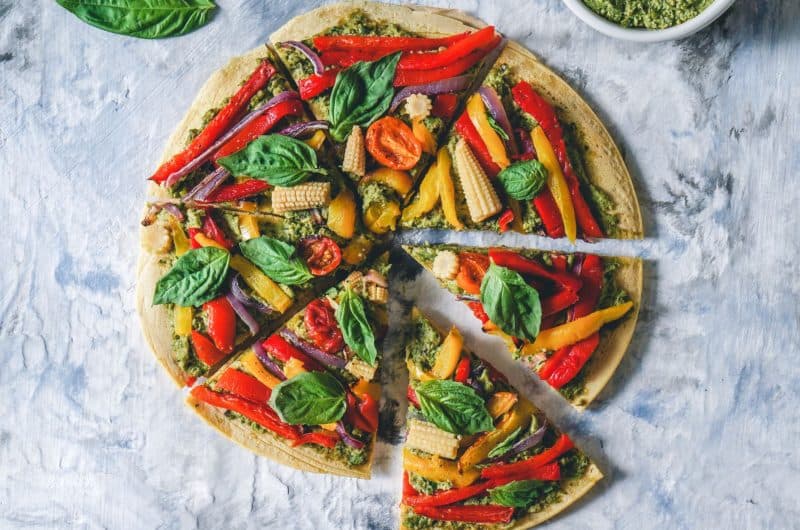
Mary Berry Vegan Pizza Recipe – Crispy, Colourful, and Completely Dairy-Free
Course: DinnerCuisine: Vegan4
servings30
minutes10
minutes420
kcalIngredients
For the dough
200g strong white bread flour, plus extra for rolling
1½ tsp fast-action dried yeast
1 tsp caster sugar
1 tsp flaked sea salt
125ml warm water
Olive oil, for greasing
For the topping
2 tbsp extra virgin olive oil
1 small onion, finely chopped
2 garlic cloves, crushed
400g tin chopped tomatoes
1 tsp dried oregano
½ red or yellow pepper, deseeded and thinly sliced
½ large courgette, very thinly sliced
100g chestnut mushrooms, thinly sliced
100g artichoke hearts in oil, drained and quartered or sliced
4 tbsp ground almonds
14–16 green or black olives, or a mixture, drained
Large handful fresh basil leaves
Flaked sea salt and freshly ground black pepper
Directions
- Sift the flour into a large bowl. Stir in the yeast, sugar and salt.
- Add the warm water and mix until a soft, spongy dough forms.
- Knead on a lightly floured surface for about 5 minutes, until smooth.
- Place in a greased bowl, cover and leave in a warm place for about 1 hour, or until doubled in size.
- Meanwhile, heat the olive oil in a frying pan. Cook the onion for about 5 minutes until softened and lightly browned. Add the garlic for the final minute.
- Add the chopped tomatoes and oregano. Season well and cook over fairly high heat for 8–10 minutes, stirring regularly, until very thick. Set aside to cool.
- Divide the dough into two pieces and shape into balls. Roll each one into a roughly 25cm/10-inch circle.
- Place on lined baking trays and spread with the tomato sauce, leaving a 1.5cm border.
- Leave the bases to prove for another 30–40 minutes.
- Preheat the oven to 240°C/220°C Fan/Gas 8.
- Arrange the pepper, courgette, mushrooms and artichokes over the bases.
- Sprinkle with ground almonds and top with olives.
- Bake for 9–10 minutes, until the vegetables are just cooked and the crust is golden brown.
- Scatter with fresh basil, drizzle with olive oil and serve immediately.
The Secret Behind This Bake
There are three things that make this pizza work.
First, the tomato sauce needs to be thick. I cook it down until there’s very little excess moisture. A watery sauce is one of the quickest ways to end up with a soggy pizza.
Second, the vegetables need to be very thinly sliced. Courgette in particular holds quite a bit of water, so thick slices can steam rather than roast.
And finally, don’t overcrowd the base. I learned that one the hard way.
The little sprinkle of ground almonds is also clever. They add nuttiness and texture where cheese would normally sit, while the olives and artichokes bring plenty of savoury depth.
INGREDIENTS + WHY THEY MATTER
- Strong white bread flour – Gives the dough enough structure to rise properly while still becoming crisp around the edges.
- Fast-action dried yeast – The ingredient responsible for that lovely airy texture. Make sure it’s fresh; tired yeast makes for a disappointingly flat pizza.
- Caster sugar – A small amount helps the yeast along and rounds out the flavour of the dough.
- Flaked sea salt – Essential for seasoning the dough. Pizza without enough salt tastes remarkably dull.
- Warm water – Brings the dough together. Keep it warm rather than hot so you don’t interfere with the yeast.
- Olive oil – Used for greasing and later for drizzling over the finished pizzas.
For the topping
- Onion – Forms the sweet, savoury foundation of the tomato sauce.
- Garlic – Adds depth. I put it in towards the end of cooking the onion so it becomes fragrant without burning.
- Chopped tomatoes – The main ingredient in the pizza sauce. Cooking them down is particularly important here.
- Dried oregano – Gives the sauce that unmistakable pizza-shop aroma.
- Red or yellow pepper – Adds sweetness, colour and a little crunch.
- Courgette – Lovely on pizza when sliced thinly. Thick pieces can release too much water.
- Chestnut mushrooms – Add a meaty, savoury texture without any meat.
- Artichoke hearts – One of my favourite additions. They bring a slightly tangy, rich flavour that makes the topping much more interesting.
- Ground almonds – Add a nutty finish and a little texture instead of using cheese.
- Green or black olives – Salty, briny flavour that cuts through the sweetness of the tomato sauce.
- Fresh basil – Add it after baking rather than before. The fresh leaves taste brighter that way.
Ingredient Swaps That Hold Up
I’d keep the basic dough and sauce as written, then have a little fun with the vegetables.
Different vegetables
You can swap the listed vegetables for other vegetables you have available, provided they’re thinly sliced and not piled too high.
Good options include thinly sliced courgette, peppers, mushrooms and artichokes.
Green or black olives
Either works. I rather like a mixture because you get slightly different flavours throughout the pizza.
Vanilla—sorry, no!
There’s no need for dairy here, and I wouldn’t start adding random vegan cheese simply for the sake of it. The almonds, olives and artichokes already give the pizza plenty of character.
MISTAKES I’VE MADE (AND HOW TO AVOID THEM)
| What Went Wrong | Why It Happens | How to Fix It |
|---|---|---|
| Soggy centre | Too many vegetables or watery sauce | Cook sauce until very thick and keep toppings thin |
| Dense crust | Dough wasn’t kneaded or left to rise properly | Knead for 5 minutes and let it double in size |
| Burnt vegetables | Slices were too thin or oven ran very hot | Keep an eye on them during the final minutes |
| Bland pizza | Sauce or dough wasn’t seasoned enough | Season the tomato sauce generously |
My biggest mistake was definitely overloading the pizza. It’s tempting because all those colourful vegetables look so pretty on the raw dough. Resist. Your crust will thank you.
HOW TO MAKE MARY BERRY’S VEGAN PIZZA
1. Make the dough
Sift the flour into a large bowl.
Stir in the yeast, sugar and salt.
Add the warm water and mix with a wooden spoon until everything comes together into a soft, slightly spongy dough.
It will feel sticky at this point. Don’t panic.
2. Knead until smooth
Turn the dough onto a lightly floured work surface and knead for about 5 minutes.
You’re looking for a dough that feels smooth and elastic rather than rough and shaggy.
Place it into a lightly greased bowl, cover with lightly oiled cling film and leave somewhere warm for about 1 hour, or until doubled in size.
3. Make the tomato sauce
While the dough rises, heat 2 tablespoons olive oil in a frying pan.
Add the chopped onion and cook gently for about 5 minutes, stirring regularly, until softened and lightly browned.
Add the crushed garlic during the final minute.
Pour in the chopped tomatoes and stir in the oregano.
Season with salt and pepper.
Turn the heat up and cook for 8–10 minutes, stirring regularly, until the sauce is very thick.
This is not the time to leave a loose, soupy tomato sauce sitting on your pizza. Cook it down.
Set aside to cool.
4. Shape the pizza bases
Once the dough has doubled, divide it into two equal pieces.
Shape each piece into a ball and flatten slightly.
Roll each one out on a well-floured surface until approximately 25cm/10 inches across.
For a particularly thin and crispy pizza, roll it a little further.
5. Add the sauce
Place each base onto a baking tray lined with non-stick baking paper.
Spread the cooled tomato sauce over each base, leaving roughly a 1.5cm border around the edge.
Don’t drown it in sauce.
Leave the bases to prove again for 30–40 minutes.
6. Prepare the vegetables
Slice the pepper, courgette, mushrooms and artichokes thinly.
This is where I remind myself not to get carried away.
You want enough topping to cover the pizza attractively, but you should still be able to see plenty of tomato sauce underneath.
7. Finish the pizzas
Preheat the oven to 240°C/220°C Fan/Gas 8.
Arrange the vegetables over the pizza bases.
Sprinkle over the ground almonds and add the olives.
Give everything a final check before it goes into the oven. If you’ve created a mountain of vegetables, remove a few.
8. Bake
Bake for 9–10 minutes, or until the vegetables are just cooked and the crust is golden brown.
If you’re baking both pizzas at once, you may need to give the pizza on the lower shelf a little longer.
The edges should be golden and crisp, while the centre should feel cooked rather than floppy.
9. Finish and serve
Scatter generously with fresh basil.
Drizzle with a little extra olive oil.
Slice and serve straight away.
TIPS FROM MY KITCHEN
- Freeze your ice cream bowl—wrong recipe! But seriously, the pizza equivalent is to get the oven properly hot before the dough goes in. A blazing-hot oven is what gives you that lovely crust.
- I cook the tomato sauce until it looks almost too thick. It loosens slightly on the pizza, and that’s exactly what you want.
- Slice courgettes and mushrooms very thinly. Thick vegetables release more moisture and can make the centre soft.
- If you’re making two pizzas, don’t feel obliged to bake them side by side if your oven struggles. One at a time can give you more even browning.
STORAGE + SERVING
Pizza is at its best straight from the oven, when the crust is crisp and the basil is fresh.
If you have leftovers, refrigerate them in an airtight container and eat within 2–3 days.
For reheating, I prefer a hot oven or frying pan rather than the microwave. The microwave warms the pizza but turns that lovely crust rather floppy.
Serve with:
- A crisp green salad
- Roasted vegetables
- Garlic bread
- Extra fresh basil
- A drizzle of good olive oil
FAQs
Can you make vegan pizza without cheese?
Absolutely. This recipe uses ground almonds, olives and artichoke hearts to add richness and savoury flavour without dairy cheese.
What vegetables are good on vegan pizza?
Peppers, courgettes, mushrooms and artichokes all work beautifully. The important thing is to slice them thinly and avoid overcrowding the pizza.
How do you make vegan pizza crispy?
Roll the dough thinly, cook the tomato sauce until very thick, use thinly sliced vegetables and bake at a high temperature. Keeping moisture under control is the big trick.
Why is my homemade pizza soggy in the middle?
Usually there’s too much moisture. A watery tomato sauce, thick courgette slices or simply too many vegetables can all make the centre soft. Cook the sauce down well and keep the topping relatively light.
Is homemade pizza dough vegan?
This dough is vegan because it contains flour, yeast, sugar, salt and water, with olive oil used for greasing. There are no eggs or dairy ingredients.