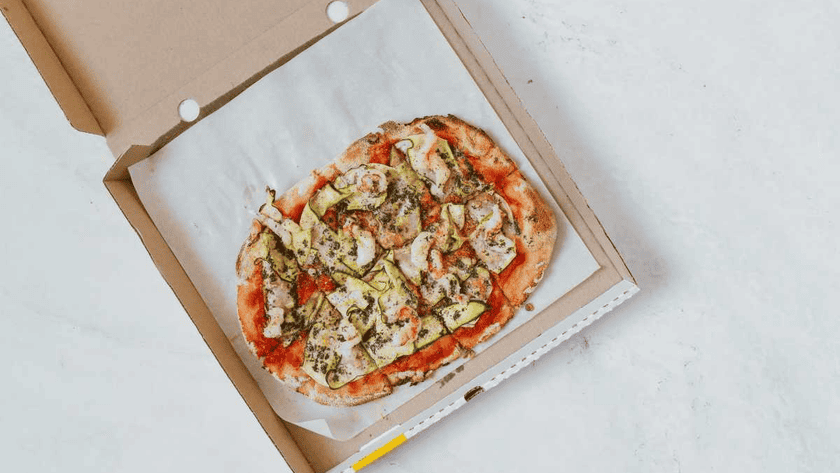
There’s a moment in a pizzeria when your eyes land on the pinsa and a question comes to mind: how much will it add to my daily intake? Its elongated oval shape, crisp crust and airy centre suggest something lighter than a traditional round pizza. There’s some truth to that impression, as long as you know what’s on your plate.
Pinsa is made with a highly hydrated dough that matures for a long time and usually contains a blend of wheat, rice and soy flours. These features give it its airy texture and satisfying crunch, and help explain why it can leave you feeling less weighed down after a meal. Let’s look at the numbers and see how to enjoy it while keeping an eye on your diet.
Pinsa vs pizza: what really changes on your plate
Pinsa and pizza have plenty in common, but pinsa generally has a thinner, airier base, which affects the weight of a serving. For the same surface area, an airy dough may weigh less than a denser one because some of its volume comes from the air trapped during rising. The flour blend also shapes its texture: rice flour helps make the crumb lighter, while soy flour contributes to its structure.
Toppings, though, play a major role. A light base piled high with rich cheeses and cured meats can quickly lose its initial advantage. What matters in the end is the combination of ingredients, not the dough alone.
Calorie figures should be treated as estimates, since recipes and serving sizes vary. A serving of margherita pinsa may contain somewhat fewer calories than a comparable round pizza, partly because its base can weigh less. The difference may be modest, though, and pinsa is still a substantial meal.
Why pinsa can feel easier to digest
There are a few reasons why pinsa feels light when you bite into it. The first is its high hydration: the dough contains a lot of water, which helps give it a softer, less dense texture.
The second is time. Pinsa dough often matures in the refrigerator for a day or two. During that time, enzymes act on some of the starches and proteins in the flour. This process may affect the dough’s texture and how it feels after eating, although digestion varies from person to person.
Pinsa recipes also often use a small amount of yeast, allowing the longer rising time to do much of the work. Together, these characteristics help create the airy texture that many people associate with a lighter meal.
To answer the question how many calories does pinsa really have, digestibility tells us less than the flour, portion size and toppings do. Feeling light after a meal and eating fewer calories are two different things.
How to fit pinsa into a balanced diet
If you’re including pinsa in a balanced diet, it helps to pay close attention to the toppings. A margherita with tomato, mozzarella and basil is a fairly simple choice. A carbonara pinsa loaded with guanciale, egg and cheese makes for a much richer meal.
Vegetables are another option. Courgettes, aubergines, peppers and friarielli add flavour, fibre and volume without necessarily adding many calories. A handful of rocket and a few fresh cherry tomatoes, added after baking, bring freshness to the finished pinsa.
For protein, you could choose leaner toppings such as bresaola, tuna, chicken or an egg. Lean prosciutto is another possibility. These ingredients can make the meal more filling and varied.
Portion size matters, too. A whole pinsa with generous toppings may be enough for a meal on its own, without a starter or dessert. Pay attention to when you feel full rather than finishing it simply out of habit.
Pinsa diet calories: what to keep in mind before ordering
So, can pinsa be part of a balanced diet? Yes. Its airy base and crisp texture make it an enjoyable choice, even when you’re watching what you eat. They don’t, however, make its calories disappear.
Before ordering, consider three things: the toppings, which can change the calorie count considerably; the portion, which you can match to your appetite; and what else you’ve eaten that day. A pinsa for dinner can fit comfortably into an overall balanced eating pattern.