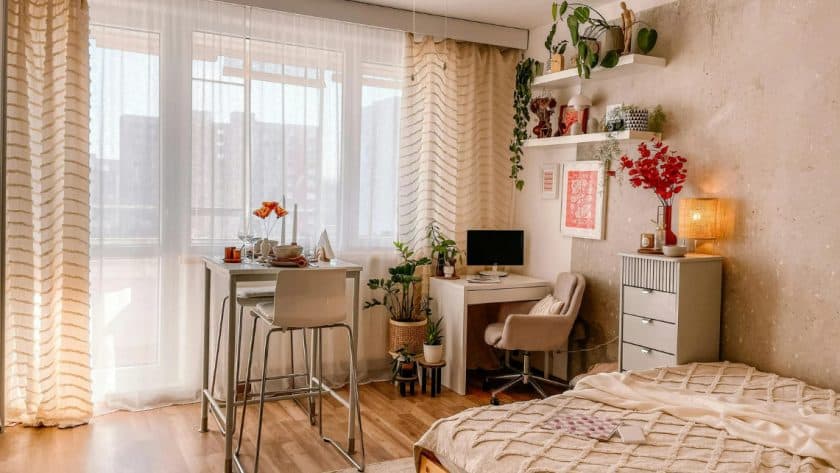
Designing a home office within a bedroom can be challenging, especially when you want the space to feel productive without sacrificing comfort. Whether you work remotely every day or simply need a designated spot for occasional tasks, the key is to blend function and relaxation in a way that feels intentional and visually cohesive.
Here are five timeless interior design tips that will help transform any bedroom-office hybrid into a space that works beautifully for both rest and productivity.
5 Interior Design Tips for Bedrooms
1. Choose the Right Furniture
Furniture plays a defining role in the success of a bedroom workspace. The goal is to select pieces that serve your needs without overwhelming the room.
A well-proportioned desk is essential – large enough for your work essentials yet small enough to maintain visual balance. Desks with built-in storage help keep clutter out of sight, preventing your workspace from spilling into your relaxation zone. Multifunctional pieces, such as beds with storage drawers or ottomans that double as seating and storage, are perfect for tight spaces.
Comfort is equally important. Opt for ergonomic chairs that provide proper support while still complementing your bedroom’s aesthetic. The right chair helps you stay comfortable during long work sessions without compromising the room’s overall design.
2. Add Personal Touches With Art and Decor
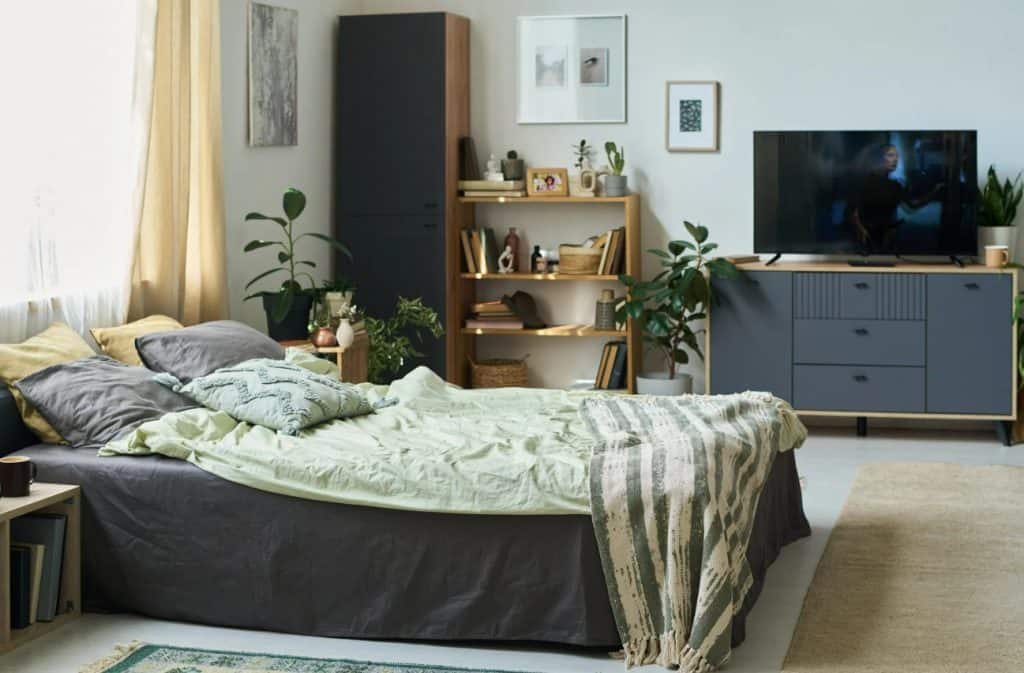
A workspace becomes far more inviting when it reflects your personality. Art and décor can shape the atmosphere, inspire creativity, and bring visual interest to an otherwise simple setup.
Consider adding a calming print above your desk or incorporating subtle decorative elements like mirrors, plants, or soft textiles for warmth and depth. Personal touches can be minimal yet meaningful – your environment should elevate your mood without distracting you.
If you’re looking for expressive artwork that blends seamlessly into bedroom-office styling, explore curated wall art collections at https://tryartwork.com/, where you can find pieces that inspire focus while complementing your interior design.
Thoughtfully placed décor – like greenery for freshness or candles for ambiance – can transform your workspace into a motivating and soothing environment.
3. Integrate Color Wisely
Color significantly impacts emotional tone and productivity. For a bedroom that doubles as a workspace, a soft, calming palette helps create a peaceful backdrop.
Consider using muted blues, warm grays, soft greens, or natural neutral shades. These tones promote relaxation without diminishing focus. If the room needs a touch of personality, introduce subtle contrasts through throw pillows, rugs, or accent art.
Natural light also plays a critical role. Position your desk near a window if possible, allowing daylight to improve your mood and support productivity. In the evenings, use warm-toned lamps that create a calm, comfortable ambiance without feeling harsh.
4. Prioritize Smart Storage Solutions
A tidy environment is essential in a dual-purpose room. Clutter quickly disrupts both rest and productivity, so efficient storage solutions are crucial.
Bookshelves can serve dual roles – organizing work materials while also functioning as décor. Floating shelves save floor space and offer a minimalist way to display objects. Decorative baskets and storage bins keep smaller items contained and out of sight.
Under-bed storage, closed cabinets, and built-in shelving help maintain visual order, ensuring that work-related items disappear easily when the day ends. The cleaner the space, the easier it is to switch between work and rest mode.
5. Maintain a Clear Boundary Between Work and Rest
Defining boundaries is essential when the bedroom serves two different purposes. These boundaries can be physical, visual, or psychological.
Strategic furniture placement is an effective method. Keeping the desk separate from the bed – ideally facing away from it – helps reinforce the mental distinction between work time and relaxation.
If the room is small, consider using subtle dividers, such as a curtain, folding screen, or even a tall plant to create separation. Soft décor elements, like textured bedding or layered cushions, visually differentiate the sleeping area from the workspace.
Likewise, a focused task lamp and organized desk layout signal that the work zone has its own identity within the room.
Conclusion
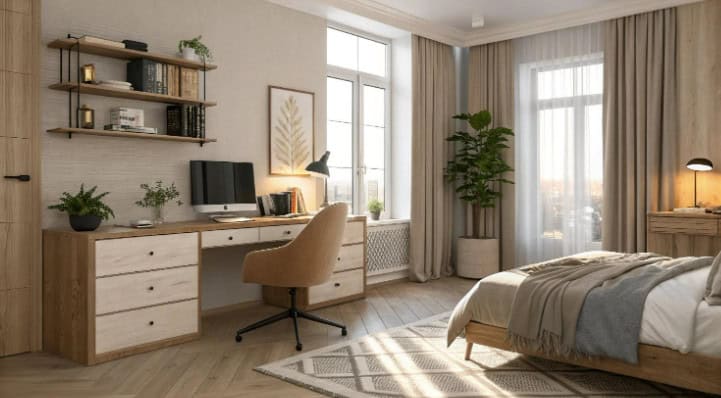
Designing a home office in your bedroom is entirely achievable with thoughtful planning and deliberate choices. By selecting functional furniture, incorporating calming colors, adding meaningful décor, and implementing smart storage solutions, you can create a space that supports productivity while preserving the tranquility your bedroom deserves.
With these timeless interior design tips or principles, your bedroom office can feel harmonious, inspiring, and perfectly integrated into your daily routine.