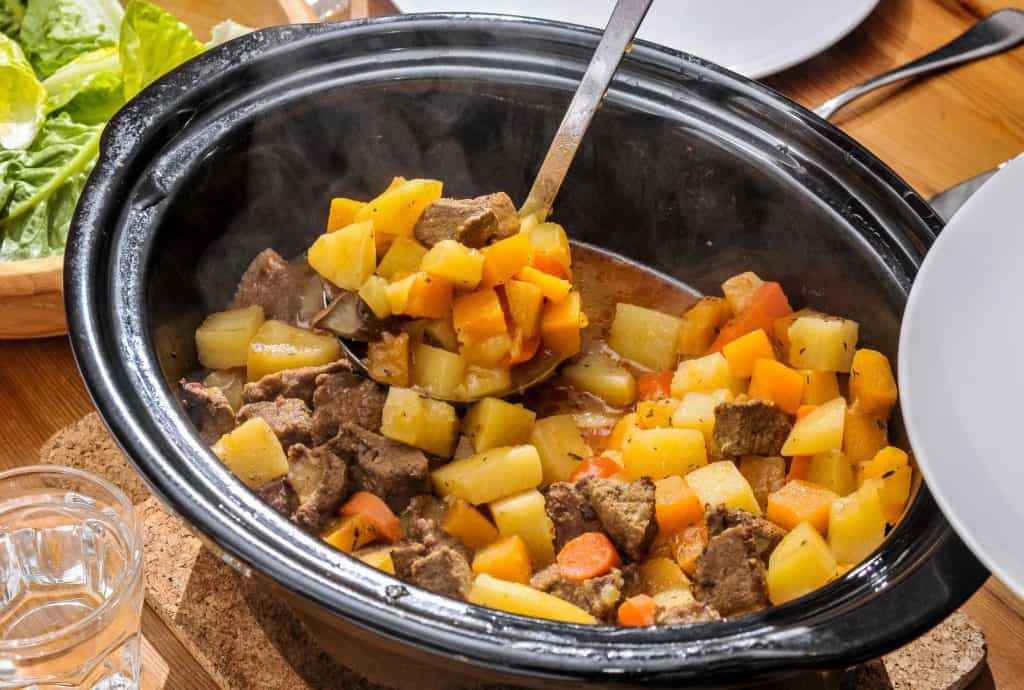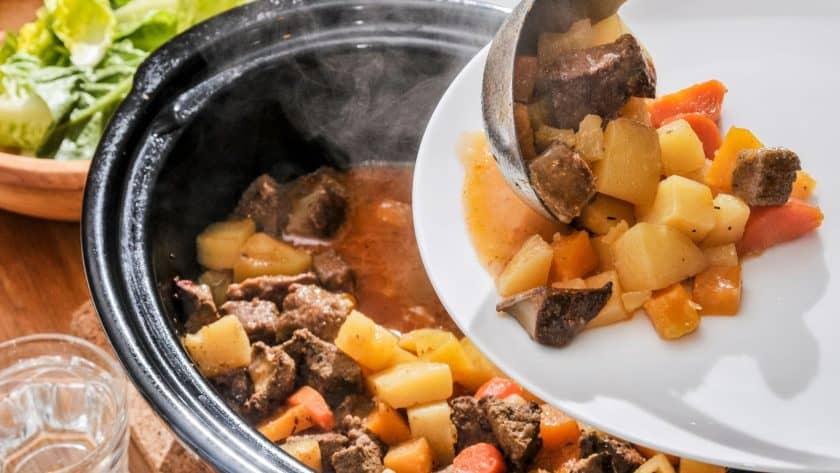
I used to think beef casserole was just… beef stew. Brown, hearty, fine. Nothing to get excited about.
Then one November, after a particularly grey and miserable afternoon, I decided to properly test it — not just throw everything into the slow cooker and hope for the best. The first version? Thin broth. Slightly tough beef. Pleasant, but forgettable.
The second time, I seared the meat properly (45 seconds per side — I timed it), deglazed with a splash of Cabernet, and — this is important — swirled in cold butter at the end. That final step changed everything. The broth turned glossy and velvety instead of watery.
Now this is the version I make every autumn. It’s rich without being heavy, deeply savoury, and the vegetables hold their shape instead of dissolving into mush.
If your beef casserole has ever been bland or stringy, let me show you what made the difference in my kitchen.
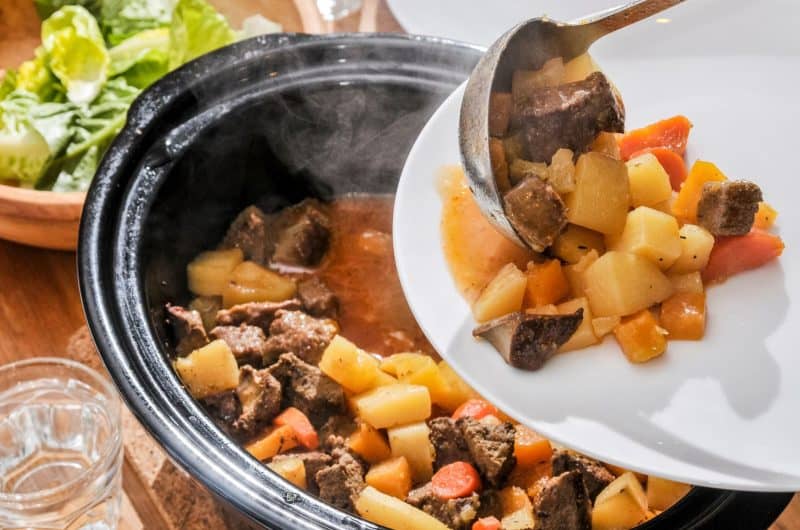
Mary Berry Slow Cooker Beef Casserole – Rich, Tender & Deeply Comforting
Course: MainCuisine: British – American6
servings20
minutes4
hours500
kcalIngredients
2½ lbs beef chuck, cubed
½ tsp black pepper
½ tsp garlic salt
½ tsp celery salt
¼ cup flour
3–6 tbsp olive oil
3 tbsp butter, divided
2 cups diced onions
4 cloves garlic
1 cup Cabernet Sauvignon
4 cups beef broth
2 bouillon cubes
2 tbsp Worcestershire sauce
3 tbsp tomato paste
5 carrots
1 lb baby Yukon Gold potatoes
2 bay leaves
1 rosemary sprig
1 cup frozen peas
Directions
- Season and flour beef.
- Sear in batches.
- Sauté onions/garlic; deglaze with wine.
- Transfer all to slow cooker.
- Cook LOW 8 hours or HIGH 4 hours.
- Add peas last 15 minutes.
- Swirl in cold butter before serving.
A Few Reasons This Just Works
- Chuck roast is essential. The connective tissue melts slowly, giving you fork-tender beef.
- Searing builds flavour. Those browned bits at the bottom of the pan? Liquid gold once deglazed.
- Red wine adds balance. It doesn’t taste “winey” — it deepens the broth.
- Cold butter at the end (monter au beurre) gives a restaurant-style finish.
I didn’t expect that last step to matter so much — but it makes the broth silky instead of thin.
INGREDIENTS + WHY THEY MATTER
- Beef Chuck (2½ lbs) – Best cut for slow cooking. I once tried lean stew meat — noticeably tougher.
- Flour (¼ cup) – Helps create a light crust when searing and gently thickens the casserole.
- Olive Oil – For browning without burning.
- Butter (3 tbsp, divided) – Adds richness; two tablespoons go in at the end.
- Yellow Onions (2 cups diced) – Sweeten as they cook.
- Garlic (4 cloves) – Fresh only — jarred garlic tastes flat here.
- Cabernet Sauvignon (1 cup) – Adds depth. I’ve used Merlot too — equally lovely.
- Beef Broth (4 cups) – Forms the base.
- Bouillon Cubes (2) – Boosts savoury flavour.
- Worcestershire Sauce (2 tbsp) – That subtle umami backbone.
- Tomato Paste (3 tbsp) – Adds body and gentle acidity.
- Carrots (5) – Sweetness and colour.
- Baby Yukon Gold Potatoes (1 lb) – Hold shape beautifully. Russets fall apart — I tested that mistake.
- Bay Leaves & Rosemary – Fragrant but not overpowering.
- Frozen Peas (1 cup) – Added at the end for freshness.
Non-obvious insight: add peas only in the last 15 minutes — earlier and they dull in both colour and texture.
Ingredient Swaps That Hold Up
Tested variations:
- No Wine? Replace with beef broth + 2 tbsp red wine vinegar.
- Irish Twist: Use stout instead of wine for deeper flavour.
- Extra Veg: Celery and parsnips work beautifully.
- Gluten-Free: Skip flour when searing and thicken with cornstarch at the end.
I don’t recommend russet potatoes — they break down too much.
MISTAKES TO AVOID
| What Went Wrong | Why It Happens | How to Fix It |
|---|---|---|
| Tough beef | Used lean cut | Use chuck with marbling |
| Watery broth | Skipped flour/sear | Lightly flour + brown first |
| Mushy potatoes | Used russets | Stick with Yukon Gold |
| Flat flavour | No deglazing | Scrape browned bits with wine |
HOW TO MAKE MARY BERRY’S SLOW COOKER BEEF CASSEROLE
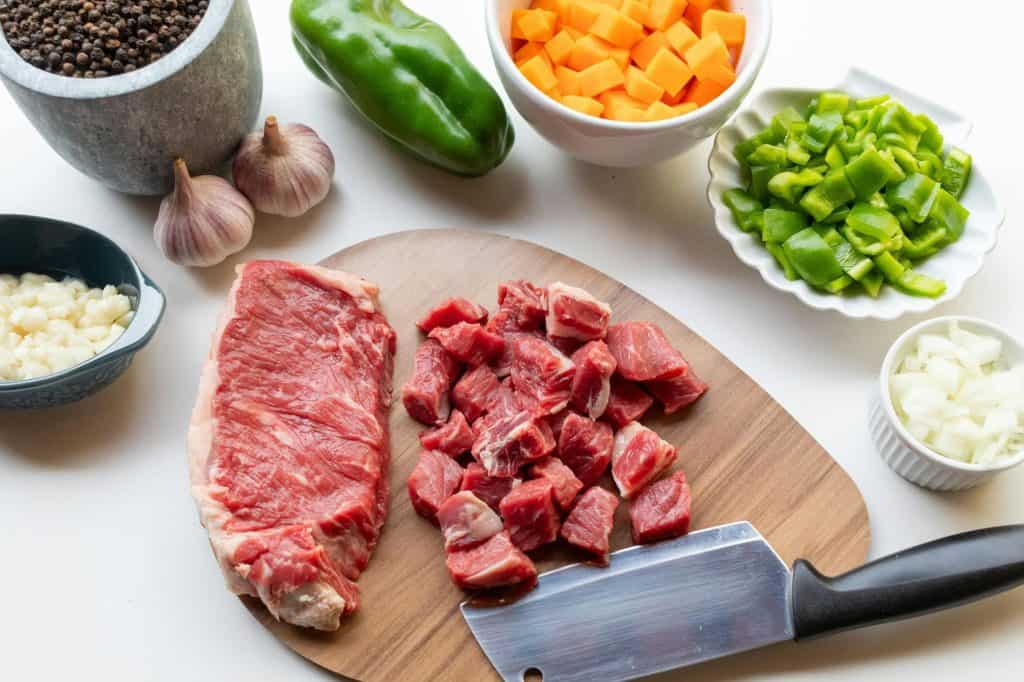
- Cut beef into 1-inch cubes.
Trim large fat pieces but keep marbling. - Season + Flour.
Toss with pepper, garlic salt, celery salt, then flour. - Sear in batches.
45 seconds per side in hot oil. Don’t overcrowd. Transfer to slow cooker. - Sauté onions & garlic.
Melt 1 tbsp butter, cook onions 5 minutes, garlic 1 minute. - Deglaze with wine.
Scrape up browned bits — this is pure flavour. - Add everything except peas + final butter.
- Cook LOW 7½–8 hours or HIGH 3½–4 hours.
- Add peas last 15 minutes.
- Optional Thicken: Stir in cornstarch slurry.
- Finish with 2 tbsp cold butter.
Swirl gently for glossy richness.
Remove bay leaves and rosemary stem before serving.
TIPS FROM MY KITCHEN
- I brown the meat in my heavy cast iron pan — better crust.
- Slightly larger potato chunks prevent over-softening.
- Let it sit 10 minutes before serving — it thickens naturally.
- Tastes even better the next day (I actually prefer it then).
STORAGE + SERVING
- Fridge: Up to 3 days.
- Freezer: Up to 3 months.
- Reheat: Gently on stove; add splash of broth if thickened too much.
- Serve With: Buttermilk biscuits, mashed potatoes, or crusty bread.
It’s especially lovely spooned over creamy mash.
FAQs
Can you put raw beef in a slow cooker?
Yes, but searing first adds significantly more flavour.
What is the best cut of beef for casserole?
Chuck roast is best due to connective tissue that breaks down slowly.
Do you need to brown stew meat first?
Technically no — but for depth of flavour, absolutely yes.
How do you thicken beef casserole?
Use a cornstarch slurry or swirl in cold butter at the end.
Why is my beef casserole tough?
Either the cut was too lean or it hasn’t cooked long enough.