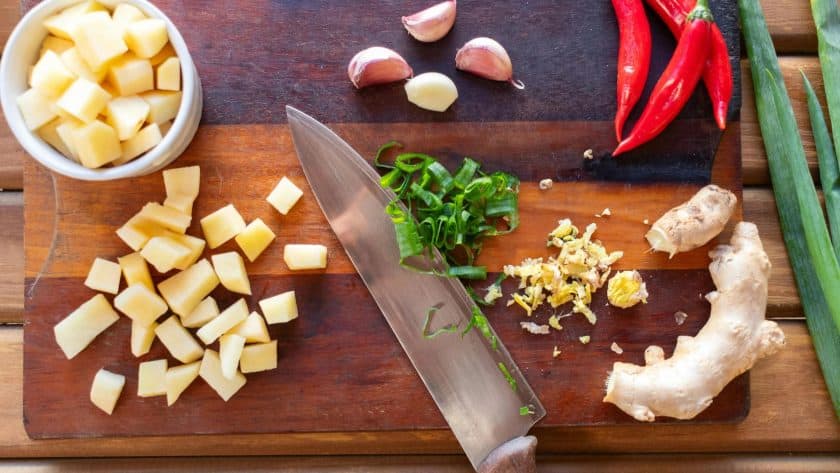
A great recipe starts with great prep — and that means a cutting board that fits your kitchen, your style of cooking, and the work you do most. Whether you’re rolling out choux pastry for éclairs, chopping many onions for a hearty stew, or kneading bread dough, the right board makes the job easier and keeps your knives happier. Here’s a clear, practical guide to help you choose the perfect cutting board for baking and cooking.
1. Think about purpose first: baking or heavy chopping?
Start by asking what you’ll use the board for most:
- Baking & pastry — you’ll want a smooth, stable surface for rolling pastry, shaping dough and handling delicate items. A board with a flat surface and a little weight to keep it steady is ideal. Wooden boards (beech, maple, oak) and non-porous composite boards are favourites.
- Everyday meal prep — if you chop vegetables, slice meat, and prepare salads, durability and hygiene matter. Hardwoods and quality plastic boards both work well.
- Butchery/heavy chopping — for heavy-duty cleaving or lots of meat work, thicker, tougher boards (heavy end-grain wood or thick high-density plastic) protect the board and your knives.
If you do all three, you might keep two boards: a flat wooden board for dough and pastry, and a designated plastic or separate wooden board for raw meat to avoid cross-contamination.
2. Choose the right material
Materials affect hygiene, knife care, maintenance, and look. Here’s a quick run-down:
- End-grain hardwood (maple, walnut, cherry):
- Pros: Gentle on knives, durable, self-healing grain that hides knife marks, beautiful.
- Cons: Heavier, needs regular oiling, more expensive.
- Best for: Serious home cooks and those who want a long-lasting, attractive board.
- Pros: Gentle on knives, durable, self-healing grain that hides knife marks, beautiful.
- Edge-grain hardwood (beech, oak):
- Pros: Cheaper than end-grain, still attractive, good for pastry and chopping.
- Cons: Shows marks more readily, slightly less forgiving to knives.
- Pros: Cheaper than end-grain, still attractive, good for pastry and chopping.
- Bamboo:
- Pros: Eco-friendly, hard-wearing, lightweight.
- Cons: Can be harsher on knives than soft maple; some bamboo boards are glued from strips and may split over time.
- Pros: Eco-friendly, hard-wearing, lightweight.
- Plastic (HDPE or polypropylene):
- Pros: Hygienic, dishwasher-safe (if rated), inexpensive, colour-coded for food safety.
- Cons: Shows deep cuts which can harbour bacteria if not replaced, less attractive for serving or pastry work.
- Best for: Raw meat, quick cleaning, busy kitchens.
- Pros: Hygienic, dishwasher-safe (if rated), inexpensive, colour-coded for food safety.
- Composite (Richlite, Epicurean):
- Pros: Stable, dishwasher-safe, low maintenance, attractive.
- Cons: More costly than basic plastic, still not as knife-friendly as soft hardwood.
- Pros: Stable, dishwasher-safe, low maintenance, attractive.
- Glass or marble:
- Pros: Beautiful and very hygienic, ideal cooling surface for pastry and chocolate.
- Cons: Extremely hard on knives and noisy. Marble can be heavy and cold (good for pastry), but not for everyday chopping.
- Pros: Beautiful and very hygienic, ideal cooling surface for pastry and chocolate.
For bakers who roll and shape, a wooden or composite board is generally best — warm under the hands, forgiving with knives and pleasant for dough.
3. Size and thickness matter
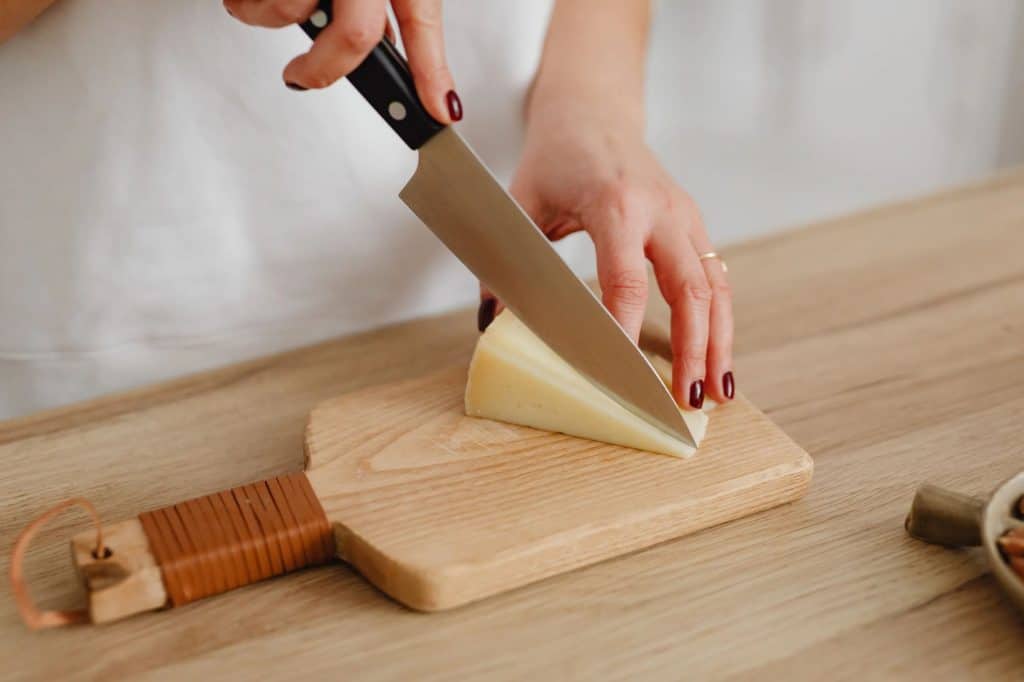
- Size: You want a board that fits comfortably on your counter with room to manoeuvre. Typical sizes range from 30×20 cm for small tasks to 45×30 cm or larger for more ambitious prep. For rolling pastry, a longer board (or a pastry board/mat) helps.
- Thickness: Thicker boards (2–4 cm for hardwood) are sturdy, won’t warp easily and give a feeling of quality. Thin boards wobble and are less stable for rolling or kneading.
- Weight: Heavier boards stay put. A light board can slide while you work — add a damp tea towel underneath to stabilise if needed.
4. Hygiene & safety
- Separate boards for raw meat and ready-to-eat foods — either use colour-coded plastic boards for meat or thoroughly clean wooden boards after raw meat, then disinfect.
- Cleaning: Plastic and some composite boards can go in the dishwasher (check manufacturer instructions). Wooden boards should be washed by hand with hot water and mild detergent, rinsed, dried upright to prevent warping.
- Sanitising: For wooden boards, a splash of white vinegar and water rinses away odours. For deeper cleaning, sprinkle coarse salt and rub with a halved lemon — great for removing stains and smells.
- Replace when necessary: If the board develops deep grooves that harbour food, it’s time to sand and refinish (for wood) or replace (especially for plastic).
5. Knife care
If you value your knives (and you should), choose a board that’s gentle on steel. End-grain wood is the best choice — the fibres separate and then close after the cut, protecting your blade. Avoid glass and very hard stone for routine cutting.
6. Maintenance & finishing touches
- Oiling wooden boards: Regularly oil with food-grade mineral oil, beeswax blends or specialised board oils to keep wood moisturised and prevent cracking. How often depends on use — a good rule is once a month for regular use.
- Sanding & refinishing: Minor surface damage can be restored with fine sanding and re-oiling. This extends the life of a quality wood board.
- Non-slip features: Look for boards with rubber feet, a juice groove, or reversible surfaces (smooth on one side, groove on the other) for versatility.
- Extras for bakers: Measurement markings, a smooth untextured face for rolling, and an even weight help when shaping pastry and dough.
7. Style and multi-function
A cutting board can be practical and pretty for custom gift boxes as well. Choose boards that double as serving platters for cheeses or breads if you entertain — but remember to use separate boards when handling raw meats. If counter space is tight, look for storage-friendly options like vertical racks or a board with a hanging hole.
8. Budget and longevity
- Budget boards: Affordable plastic or bamboo can be perfectly serviceable for many kitchens. Expect to replace plastic boards more often.
- Investing: A good quality hardwood end-grain board is an investment that — with care — can last for years and actually improve with age. For avid bakers and cooks, it’s worth considering.
9. Final checklist before buying
- What will you use it for most (baking, chopping, meat)?
- Do you need two boards to avoid cross-contamination?
- Does the size fit your counter and the tasks you do?
- Is the material gentle on your knives and easy to maintain?
- Do you want a board that looks attractive for serving?
In short
For baking and everyday cooking, a solid wooden board (edge-grain for versatility; end-grain if you want to invest in longevity and knife care) is hard to beat — it’s warm to the touch, kinder to knives, and perfect for rolling and shaping dough. Pair it with a cheaper, colour-coded plastic board for raw meats and heavy-duty chores, and you’ll have a sensible, hygienic, and beautiful set-up that sees you through anything from flaky pastry to Sunday roast.
With the right choice and a little maintenance, your cutting board will become one of the most used — and most loved — tools in your kitchen. Happy baking!