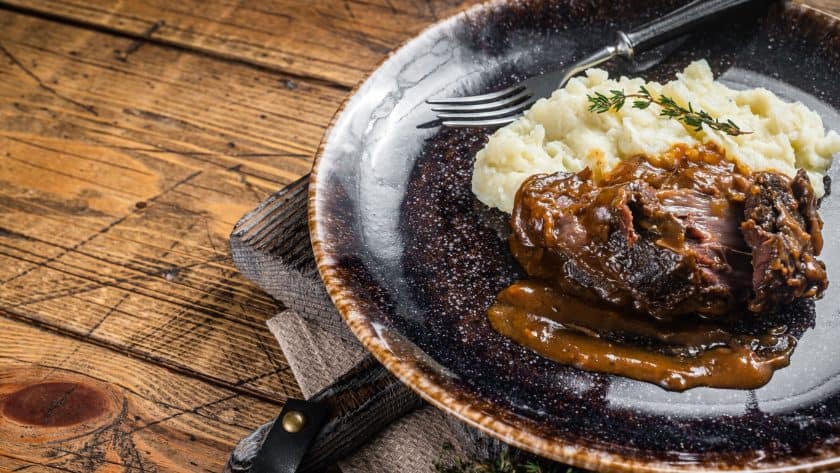
To be honest, ox cheeks weren’t something I grew up cooking.
In fact, the first time I bought them, I stood at my butcher’s counter wondering whether I’d made a terrible mistake. They looked tough, dense, and frankly not all that impressive. I nearly swapped them for a nice piece of chuck steak.
I’m very glad I didn’t.
After a few hours slowly bubbling away in red wine and stock, those humble ox cheeks transformed into one of the most luxurious beef dishes I’ve ever made. The meat became so tender that I barely needed a knife, and the sauce developed a richness that tasted like it had come from a restaurant kitchen.
My first attempt wasn’t perfect. I rushed the browning stage and ended up with a sauce that tasted a little flat. The second time, I took the extra few minutes to properly caramelize the meat and vegetables, and the difference was remarkable.
If you’ve never cooked ox cheeks before, let me show you exactly how to get that melt-in-the-mouth result every single time.
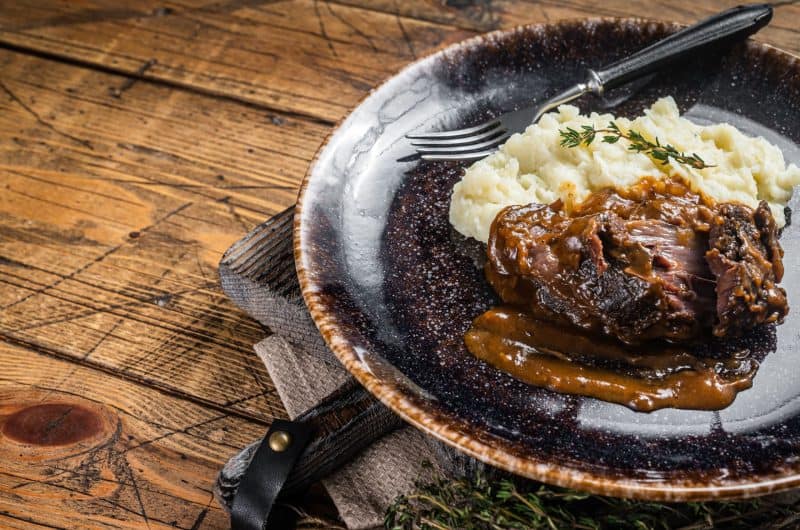
Mary Berry Ox Cheeks Recipe – Rich, Tender, and Worth Every Minute
Course: MainCuisine: British6
servings20
minutes4
hours500
kcalIngredients
900g–1.3kg ox cheeks
Salt and black pepper
2 tbsp olive oil or beef dripping
1 large onion, diced
2–3 garlic cloves, minced
2 medium carrots, diced
2 celery sticks, diced
240ml red wine
480ml beef stock
2 tbsp tomato purée
1–2 sprigs fresh thyme
1 bay leaf
1–2 tbsp Worcestershire sauce (optional)
Directions
- Preheat oven to 150°C.
- Season ox cheeks well.
- Brown the cheeks on all sides.
- Remove and sauté onion, carrots and celery.
- Add garlic and cook briefly.
- Deglaze with red wine.
- Return cheeks to the pan.
- Add stock, tomato purée, thyme, bay leaf and Worcestershire sauce.
- Cover and cook for 3–4 hours.
- Rest for 15 minutes.
- Reduce sauce if desired.
- Serve with mash or vegetables.
What Makes This Recipe Special
Ox cheeks are one of the most rewarding cuts of beef you can cook.
Unlike expensive steaks that need careful timing, ox cheeks thrive on patience. The longer, slower cooking allows the collagen to break down naturally, creating meat that’s incredibly tender and a sauce that’s naturally rich.
A few things make this version especially good:
- Proper browning builds deep flavour.
- Red wine adds richness without overpowering the beef.
- Slow cooking melts the connective tissue into the sauce.
- Fresh thyme and bay keep everything balanced.
Most recipes underestimate how important the searing stage is. I didn’t think it would matter much when I first made them—but it really did.
Ingredients + Why They Matter
Ox Cheeks (2–3 lbs / 900g–1.3kg)
The star of the show. Full of collagen that becomes silky and tender during slow cooking.
Olive Oil or Beef Dripping (2 tbsp)
For browning. Beef dripping gives an extra layer of richness.
Onion (1 large)
Creates the foundation of the sauce.
Carrots (2 medium)
Add natural sweetness.
Celery (2 sticks)
Provides depth and balance.
Garlic (2–3 cloves)
Brings warmth and savoury flavour.
Red Wine (240ml)
Adds richness and complexity. I usually use whatever Cabernet Sauvignon is already open.
Beef Stock (480ml)
Creates the braising liquid.
Tomato Purée (2 tbsp)
Adds body and subtle sweetness.
Fresh Thyme (1–2 sprigs)
Classic herb pairing for slow-cooked beef.
Bay Leaf (1)
Adds background depth.
Worcestershire Sauce (1–2 tbsp, optional)
Gives extra savoury richness.
Salt and Black Pepper
Essential for seasoning every layer.
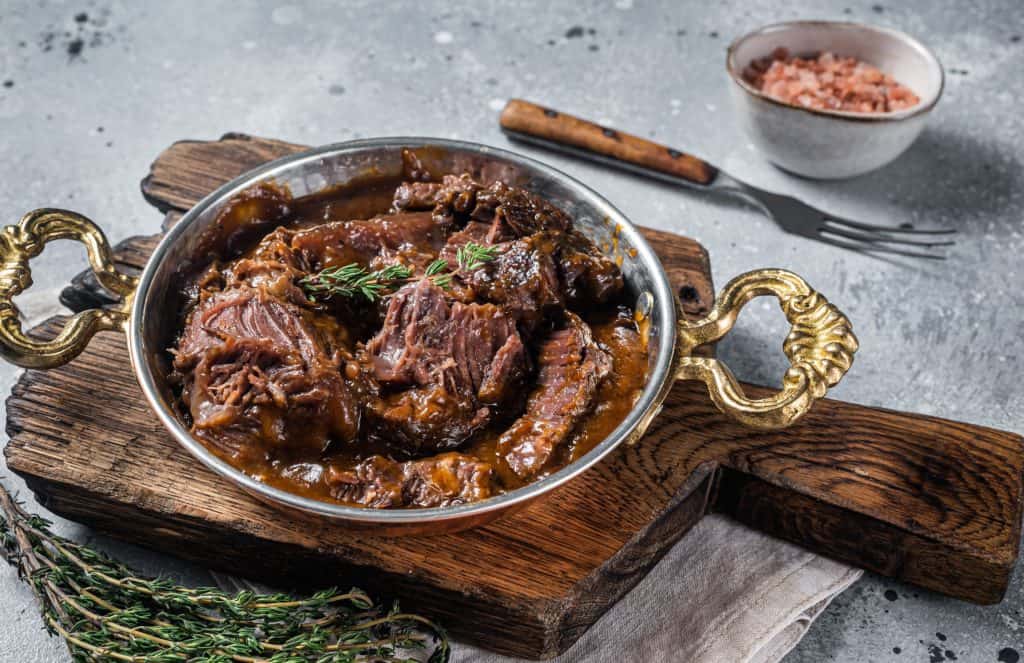
Making It Yours (Without Ruining It)
Variations I’ve Tested
Slow Cooker Version
After browning everything, transfer to a slow cooker and cook on Low for 8 hours.
Guinness Ox Cheeks
Replace half the wine with stout for a deeper flavour.
Mushroom Addition
Add 250g chestnut mushrooms during the final hour.
Root Vegetable Version
Parsnips and swede work beautifully alongside the carrots.
What Didn’t Work
- Cooking at a high temperature dried the sauce too quickly.
- Skipping the wine left the dish lacking depth.
- Lean stock made the final sauce less luxurious.
Mistakes I’ve Made (And How To Avoid Them)
| What Went Wrong | Why It Happens | How To Fix It |
|---|---|---|
| Meat stayed tough | Not cooked long enough | Continue cooking until fork tender |
| Sauce tasted flat | Skipped proper browning | Sear thoroughly before braising |
| Sauce became watery | Lid too loose | Keep tightly covered |
| Meat dried out | Oven temperature too high | Maintain 150°C throughout |
How To Make Mary Berry’s Ox Cheeks
Step 1: Season the Beef
Pat the ox cheeks dry and season generously with salt and black pepper.
Step 2: Brown the Meat
Heat the oil or dripping in a large casserole dish.
Brown the ox cheeks for 3–4 minutes on each side until deeply coloured.
Don’t rush this step.
Transfer to a plate.
Step 3: Cook the Vegetables
Add onion, carrots and celery to the same pan.
Cook for 5–7 minutes until softened.
Add the garlic and cook for another minute.
Step 4: Deglaze
Pour in the red wine.
Scrape every browned bit from the bottom of the pan.
These little caramelised pieces are pure flavour.
Simmer for 5–10 minutes.
Step 5: Build the Braise
Return the ox cheeks to the casserole.
Add:
- Beef stock
- Tomato purée
- Thyme
- Bay leaf
- Worcestershire sauce
The liquid should almost cover the meat.
Step 6: Slow Cook
Cover with a lid.
Cook in a preheated 150°C oven for 3–4 hours.
The cheeks are ready when a fork slides in with almost no resistance.
Step 7: Rest
Allow the meat to rest for 15–20 minutes.
I know it’s tempting to dive straight in, but this makes a noticeable difference.
Step 8: Finish the Sauce
Remove the cheeks.
Simmer the sauce if needed until slightly thickened.
Strain for a smoother finish if desired.
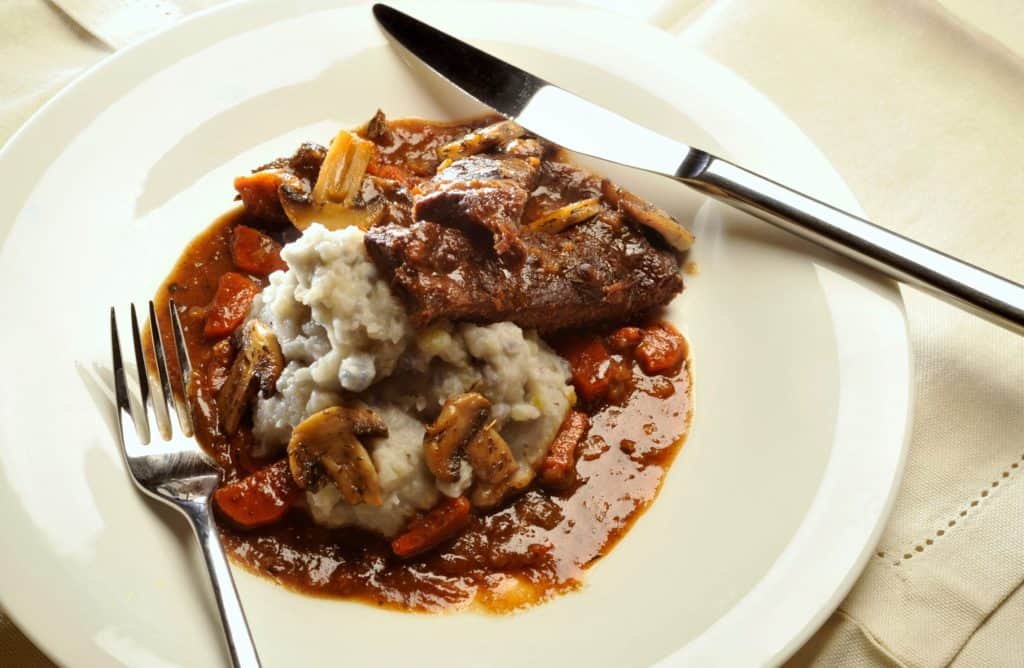
Tips From My Kitchen
- I always cook ox cheeks a day ahead if possible—the flavour improves overnight.
- My old cast iron casserole gives the most even results.
- If the sauce feels too rich, add a squeeze of lemon before serving.
- Don’t trim away too much connective tissue before cooking; that’s where the magic happens.
Storage + Serving
Storage
Refrigerator: Up to 3 days in an airtight container.
Freezing
Freeze for up to 3 months.
The sauce actually freezes exceptionally well.
Reheating
Warm gently on the hob until piping hot.
Best Side Dishes
- Creamy mashed potatoes
- Buttery polenta
- Roasted root vegetables
- Crusty bread
- Braised red cabbage
FAQs
What are ox cheeks?
Ox cheeks are the facial muscles of cattle, known for their rich flavour and tender texture after slow cooking.
How long should ox cheeks be cooked?
Typically 3–4 hours at 150°C, or until they become fork-tender.
Why are ox cheeks ideal for slow cooking?
They contain collagen and connective tissue that slowly break down, creating incredibly tender meat and a rich sauce.
Can I cook ox cheeks in a slow cooker?
Yes. Brown the meat first, then cook on Low for around 8 hours.
What wine is best for ox cheeks?
A robust red wine such as Cabernet Sauvignon, Merlot, Shiraz, or Malbec works beautifully.