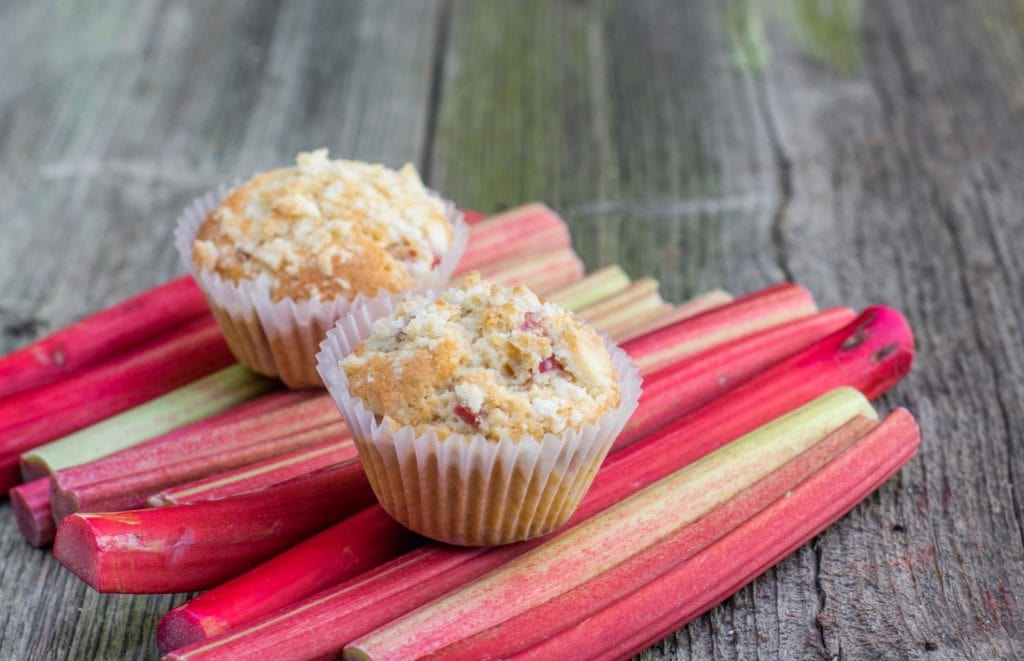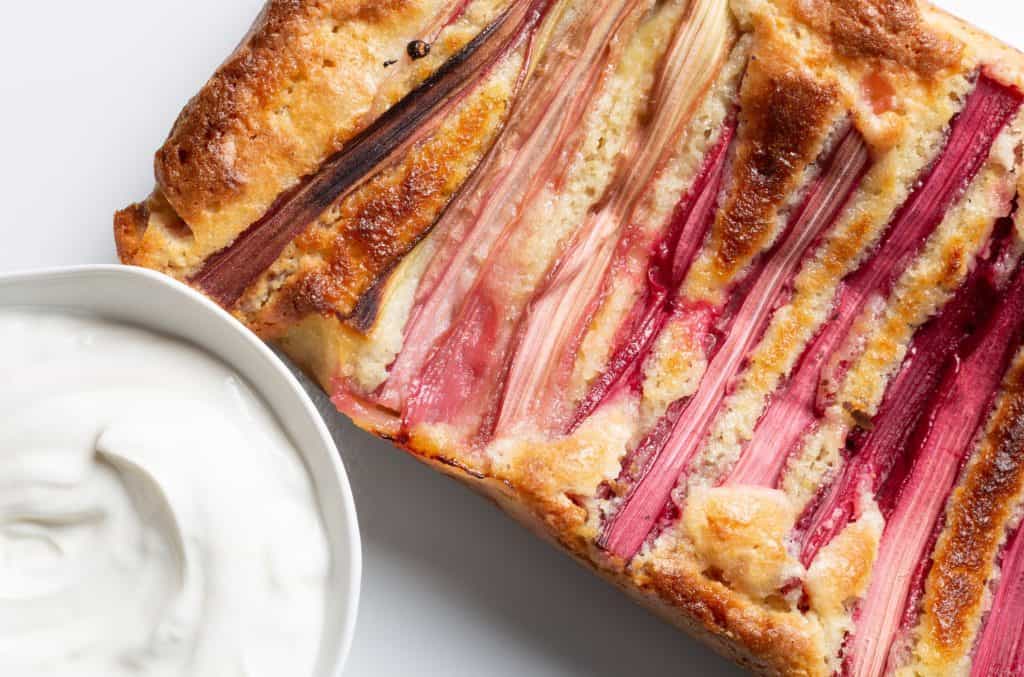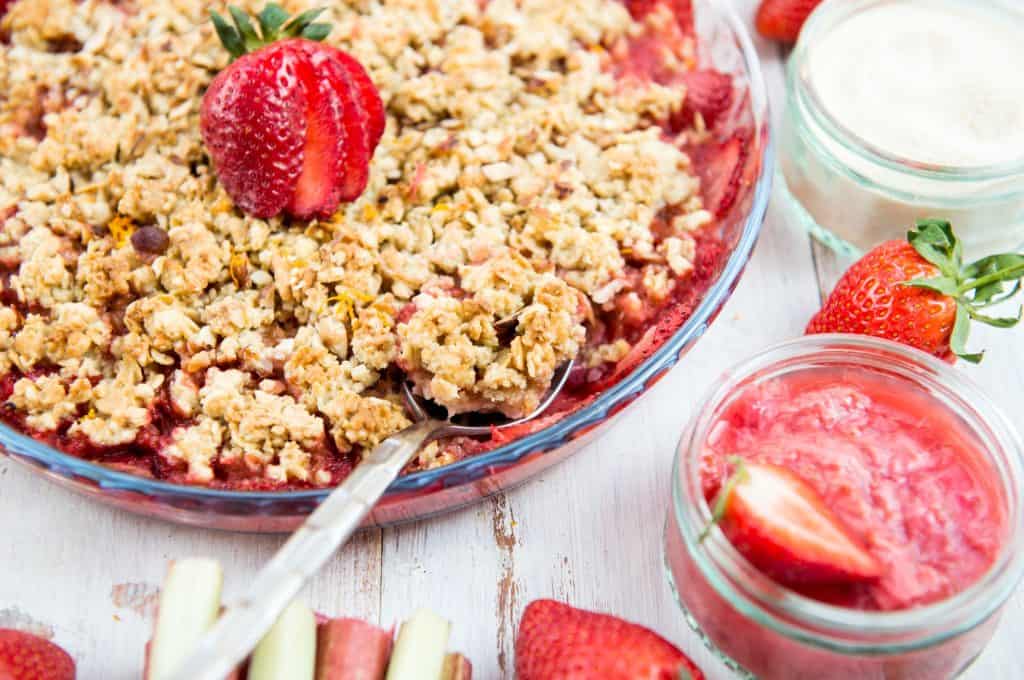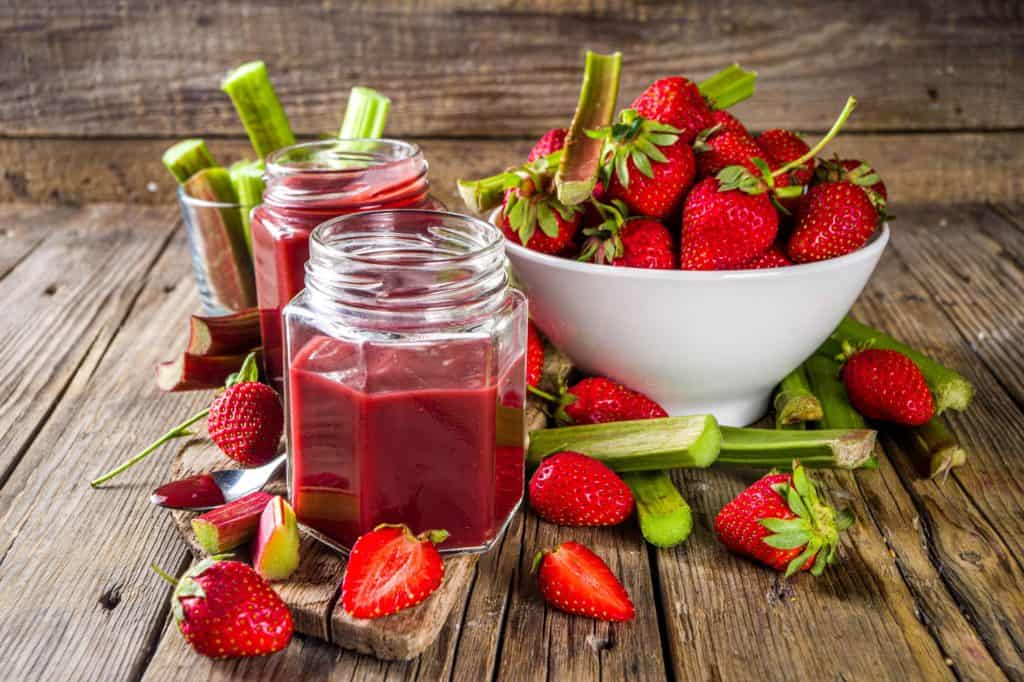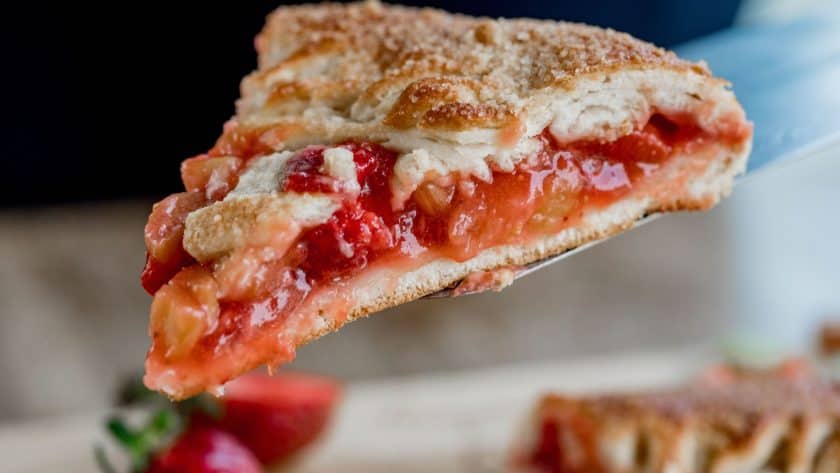
Rhubarb is such a versatile vegetable. You can add it to almost any type of recipe where a little tart and tangy flavour is needed. It’s the perfect spring ingredient that comes abundantly from the local market or home grown in the allotment. Pair it with mint, raspberries, ginger and strawberry’s for the perfect combination in good rhubarb recipes.
Rhubarb can be frozen to preserve it, which means it’s use can be year round and this can be handy when harvest time comes around and you have more rhubarb than you know what to do with.
Every spring I’m picking a big bundle of rhubarb from my garden every day—and you might be in the same boat. Or maybe you’ve grabbed some from the local market and are keen to use it, but aren’t quite sure where to start. See below for tips on how to use rhubarb as well as some great rhubarb recipes to follow.
What is Rhubarb?
Rhubarb is a perennial plant that’s technically a vegetable, though it’s most often treated like a fruit in the kitchen. Its long stalks—ranging from green to vibrant pink-red—emerge in spring as the weather warms, usually around April or May depending on your climate. It has a sharp, tangy flavour that pairs beautifully with sweetness, making it perfect for desserts. I especially love using it in gluten-free baking for that bright, balanced taste.
One important note: rhubarb leaves are toxic to both people and pets, so always discard them safely.
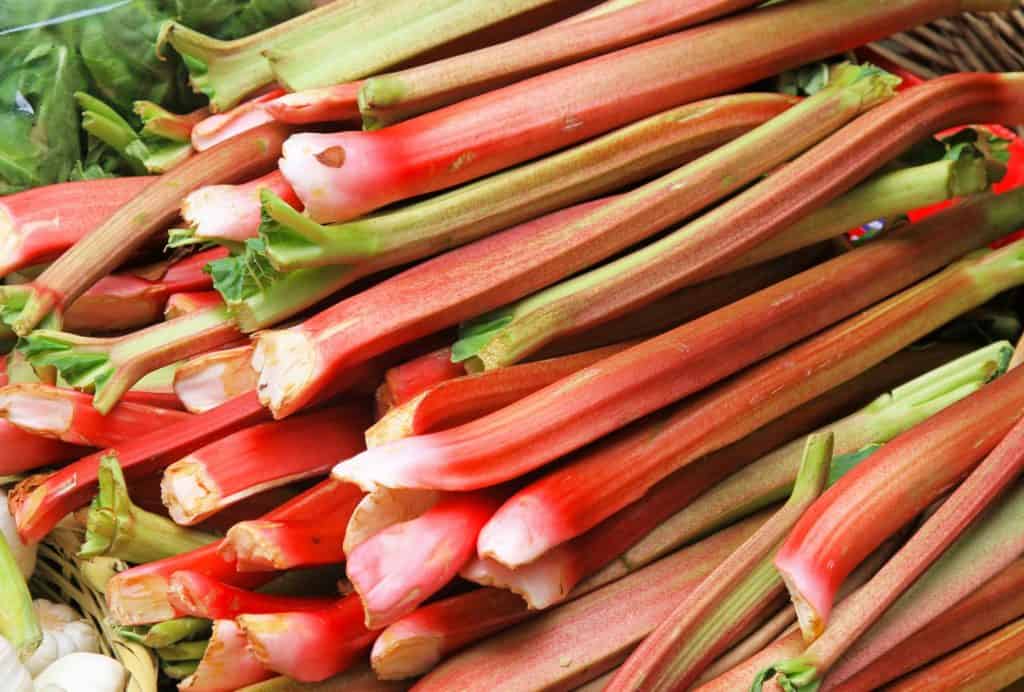
Rhubarb Flavour Pairings:
Thanks to its tart edge, rhubarb works wonderfully with sweeter ingredients and warming flavours. Try combining it with:
- berries (especially strawberries)
- vanilla
- almond
- cardamom
- lemon
- apples
- mint
- ginger
When to Harvest Rhubarb:
Rhubarb is at its best in spring, typically from May through to early July. During this window, the stalks are crisp, juicy, and full of flavour. Once they reach about 30–45 cm long, they’re ready to pick and use.
Do You Need to Peel Rhubarb?
No peeling required! Simply remove and discard the leaves, trim the ends, and slice the stalks. The outer skin softens as it cooks and adds both colour and flavour to your dishes.
How to Freeze Rhubarb:
Freezing is a simple way to enjoy rhubarb long after the season ends. There’s nothing quite like baking a rhubarb crisp in the middle of winter to bring back a taste of spring.
To freeze, wash and cut the stalks into 1–1.5 cm pieces. Spread them out on a baking tray lined with baking paper and freeze for at least 4 hours or overnight. Once solid, transfer the pieces to an airtight container or freezer bag. Stored properly, rhubarb will keep well for up to 9–10 months.